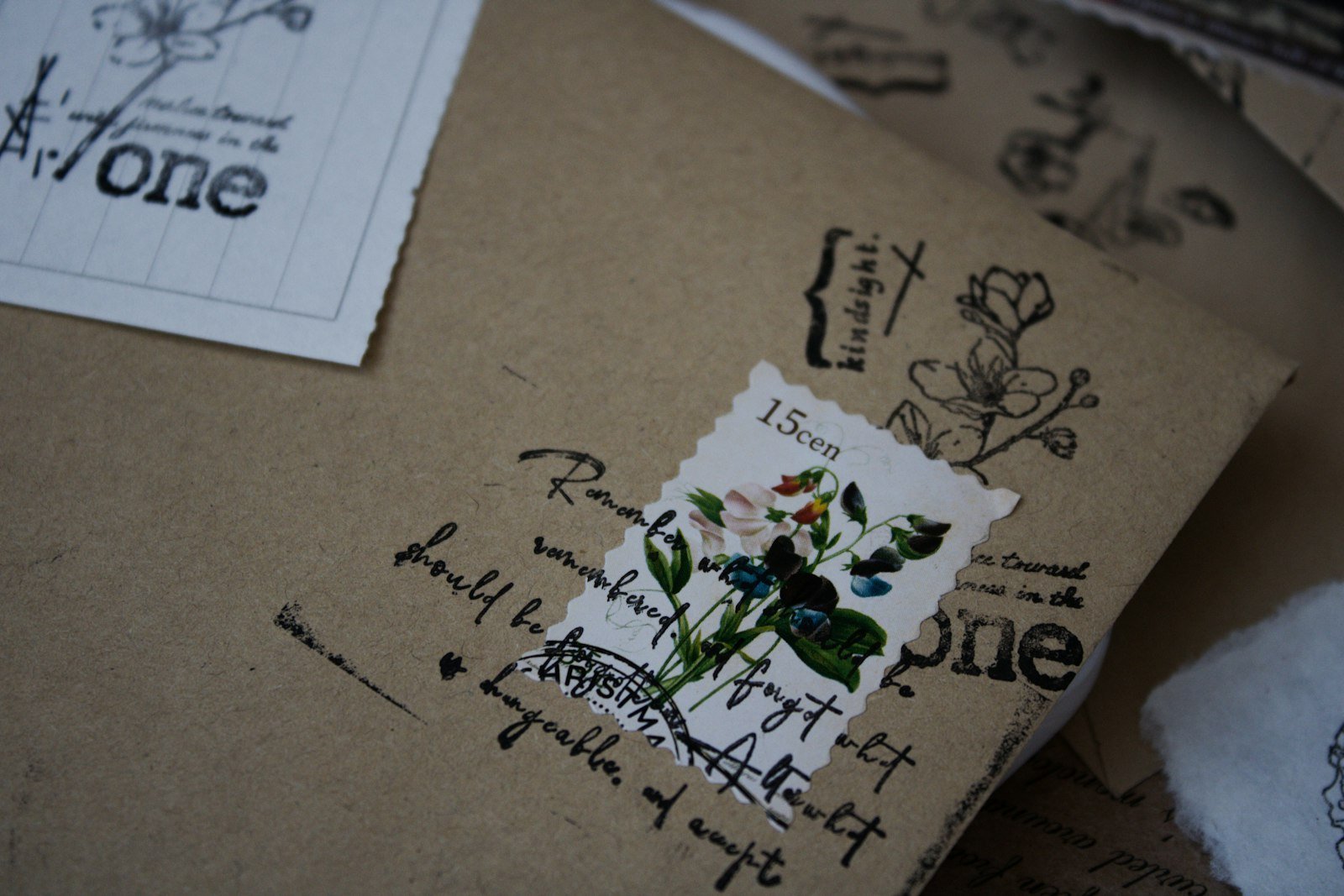
Somewhere in your home there is a small, quiet pile of evidence that you’ve lived a life. A ticket from a show you nearly skipped. A receipt from the café where you had that conversation. A tea tag, a birthday card, the paper sleeve from a hotel key. None of it is valuable. All of it is yours. And sooner or later, most of it ends up in the recycling bin.
A junk journal is the place it goes instead.
If you’ve scrolled past those thick, layered, slightly chaotic books on Pinterest or TikTok and thought that looks lovely, but it’s not for me, this guide is for you. Junk journaling is one of the few creative hobbies that asks almost nothing of you up front: no drawing skills, no special notebook, no shopping list. By the end of this page you’ll know exactly what a junk journal is, what to collect, the handful of words everyone uses, and how to make your first page in about twenty minutes.
So, what is a junk journal?
A junk journal is a handmade journal built from recycled and upcycled paper and everyday scraps: tickets, receipts, envelopes, old book pages, labels, photos, anything flat. Some people write in theirs like a diary. Some use them as travel logs, memory books or planners. Some never write a word and treat every page as a small collage. Junk journaling is simply the hobby of making and filling them.
Those scraps have a proper name: ephemera, a word for paper things that were never meant to last. In a junk journal, they finally do. As one junk journaler put it to Apartment Therapy, you can use literally anything that can be made flat.
Isn’t that just scrapbooking?
Close cousins, different personalities. A scrapbook tends to be tidy and planned, built from matching store-bought papers and focused on your own photos and milestones. An art journal leans on paint and drawing. A junk journal is the free spirit of the family: it will happily put a stranger’s 1950s postcard next to your grocery receipt and call it a good day.
| Junk journal | Scrapbook | Art journal | |
|---|---|---|---|
| Made from | Recycled paper and found scraps | Store-bought albums, papers and embellishments | A sketchbook or mixed-media journal |
| Focus | Texture, layers and the stories behind the scraps | Your photos and life events | Painting, drawing and self-expression |
| Feel | Loose, layered, often vintage | Neat and planned | Painterly and expressive |
| Cost to start | Close to nothing | Moderate | Low to moderate |
In practice, plenty of people blend all three. Nobody checks.
A hobby with surprisingly old roots
Junk journaling feels new, but the instinct behind it isn’t. It grew out of scrapbooking and collage, and it shares roots with 19th-century scrapbooks and with the make-do resourcefulness of lean years, such as the period after the Second World War, when people stitched journals together from whatever paper they could find. Much later, books like Keri Smith’s Wreck This Journal (2007) and K&Company’s Smash Books gave a generation permission to glue the everyday into their pages and stop worrying about neatness.
Then the internet did what it does. Flip-through videos on YouTube and TikTok, idea boards on Pinterest and printable papers sold on Etsy turned a quiet kitchen-table habit into a worldwide community.
Why people fall for it
Ask junk journalers why they love it and the answers rarely mention the finished book. They talk about the permission. There is no wrong way to do this, so crooked, messy and half-finished pages aren’t failures; they’re the style. They talk about cost, because the main material is literally rubbish. They talk about keeping memories without keeping clutter: a concert wristband takes up no room at all once it’s glued into a page.
And many talk about the hard days. Junk journals aren’t only for highlights. One woman interviewed by Apartment Therapy turned her late mother’s diary into art as part of grieving her. Another reason people stay with it is the making itself: half an hour of cutting, tearing and arranging, with your hands busy and your phone face-down, is its own kind of rest.
What counts as junk? More than you’d think
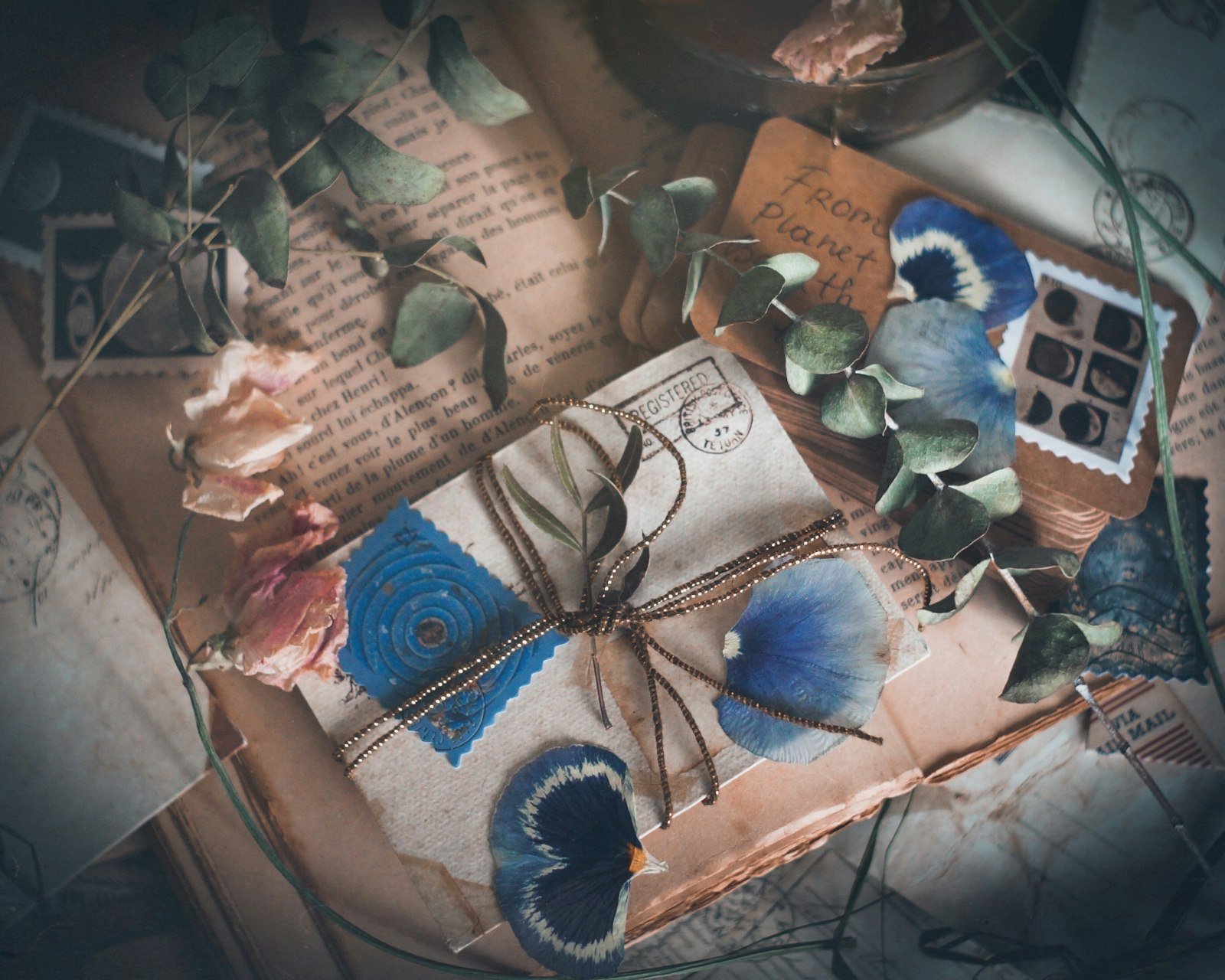
Here’s the easiest first step in the whole hobby: find a shoebox, an old tin or a big envelope, and for one week, put things in it instead of throwing them away. Don’t judge. Just collect. You’ll be startled by how fast it fills.
- Paper with a story: tickets, boarding passes, receipts, paper menus, programs, postcards and cards
- Packaging: tea tags and wrappers, chocolate wrappers, clothing labels and hang tags, pretty boxes cut flat
- Printed paper: old book pages, maps, sheet music, magazine and catalog cut-outs, and the patterned insides of security envelopes (a junk journaler’s secret favorite)
- Bits and pieces: postage stamps, buttons, ribbon, lace, doilies, fabric scraps
- Nature: leaves and flowers, pressed flat in a heavy book first
- Your own handwriting: notes from friends, old to-do lists, a doodle on a napkin
There’s only one real rule: keep it flat. Bulky treasures make a journal that won’t close and a spine that eventually gives up.
The entire beginner’s kit (it’s five things)
You will be tempted to buy supplies. Wait. Everything you need for your first journal is probably already in a drawer.
- A base. An old notebook, a thrift-store hardback you don’t mind repurposing, or a few sheets of paper folded in half and stapled down the middle. Fancy can come later.
- Something sticky. Start with a glue stick or double-sided tape. Dry adhesives keep paper flat. Wet white glue (PVA) is strong and flexible, but it can wrinkle thin paper and may take many hours to dry fully, so save it for heavier pieces like fabric.
- Scissors. Any pair. Better yet, tear things by hand; a torn edge looks softer and older than a cut one.
- A pen. A pigment fineliner is the best friend of a junk journal, because it writes cleanly over glue and coated paper without smearing. Our guide to the best pens for journaling covers a few good ones.
- Your box of scraps.
Stamps, inks, washi tape, printable papers and die-cutting machines are lovely. They are also optional. Some of the most beautiful junk journals out there were made with a glue stick and a cereal box.
The little dictionary nobody gives you
Watch a few junk journal videos and you’ll hear a vocabulary that sounds slightly like a sewing class. Here’s what it all means:
- Ephemera: the scraps themselves, anything you add to a page.
- Signature: a small stack of sheets folded in half and nested inside each other. Handmade junk journals are usually a few signatures sewn into a cover.
- Pamphlet stitch: the simplest way to sew a signature into a cover, usually through three or five holes along the fold. It’s where most beginners start.
- Tuck spot: a place where something can slide behind something else, made by gluing a piece of paper down on only two or three sides.
- Pocket: a deeper tuck spot, glued so only one edge stays open. Perfect for cards and tags.
- Belly band: a strip of paper or fabric wrapped across a page, like the band around a planner, that you can slide things under.
- Tag: a card, often shaped like a luggage tag, that you write on and tuck into a pocket.
- Fold-out: a page wider than the journal that folds open to reveal extra space.
Learn those eight and you’ll understand nearly every tutorial you watch.
How to start junk journaling this week
Give it a loose purpose
A diary, a record of one trip, a memory book for this year, or simply a place to play. You don’t need a theme, but a rough purpose makes it easier to decide what to keep. You can change your mind halfway through. Junk journals are very forgiving about that.
Pick a base you’re not precious about
If a blank, expensive notebook makes you freeze, use something you’d never worry about ruining. If you’re repurposing an old book, tear out every third or fourth page before you start. You’re about to add layers of paper, and removing pages gives them room, so the book still closes when it’s full.
Make it a ritual, not a chore
Many junk journalers set aside one evening a week to empty the scrap box and glue things in. A cup of tea, a podcast, half an hour. That small, regular slot is what turns a fun idea into a habit you’ll still have a year from now.
Your first page, in 20 minutes
The first page is only hard because it’s the first. So take the decisions away. Follow this recipe once, and you’ll have the feel of it for good:
- Lay a background. Glue down one large piece across most of the page: a map, a book page, the patterned inside of an envelope.
- Choose a hero. Pick one focal piece, such as a photo, postcard or ticket, and glue it slightly off-center. Off-center always looks more natural.
- Tuck in a supporting cast. Slide one or two smaller scraps under its edges so they peek out. This is the layering that gives junk journals their depth.
- Add a hiding place. Glue a strip of paper down on three sides to make a tuck spot, then slip in a tag or index card.
- Write something true. On the tag, write the date and a few honest lines: where you were, what happened, how it felt.
Close the book, set something heavy on top for an hour so the glue dries flat, and that’s it. You’re officially a junk journaler. The page won’t look like the ones on Pinterest. It isn’t supposed to. It’s supposed to look like your week.
The vintage look, from your kitchen cupboard
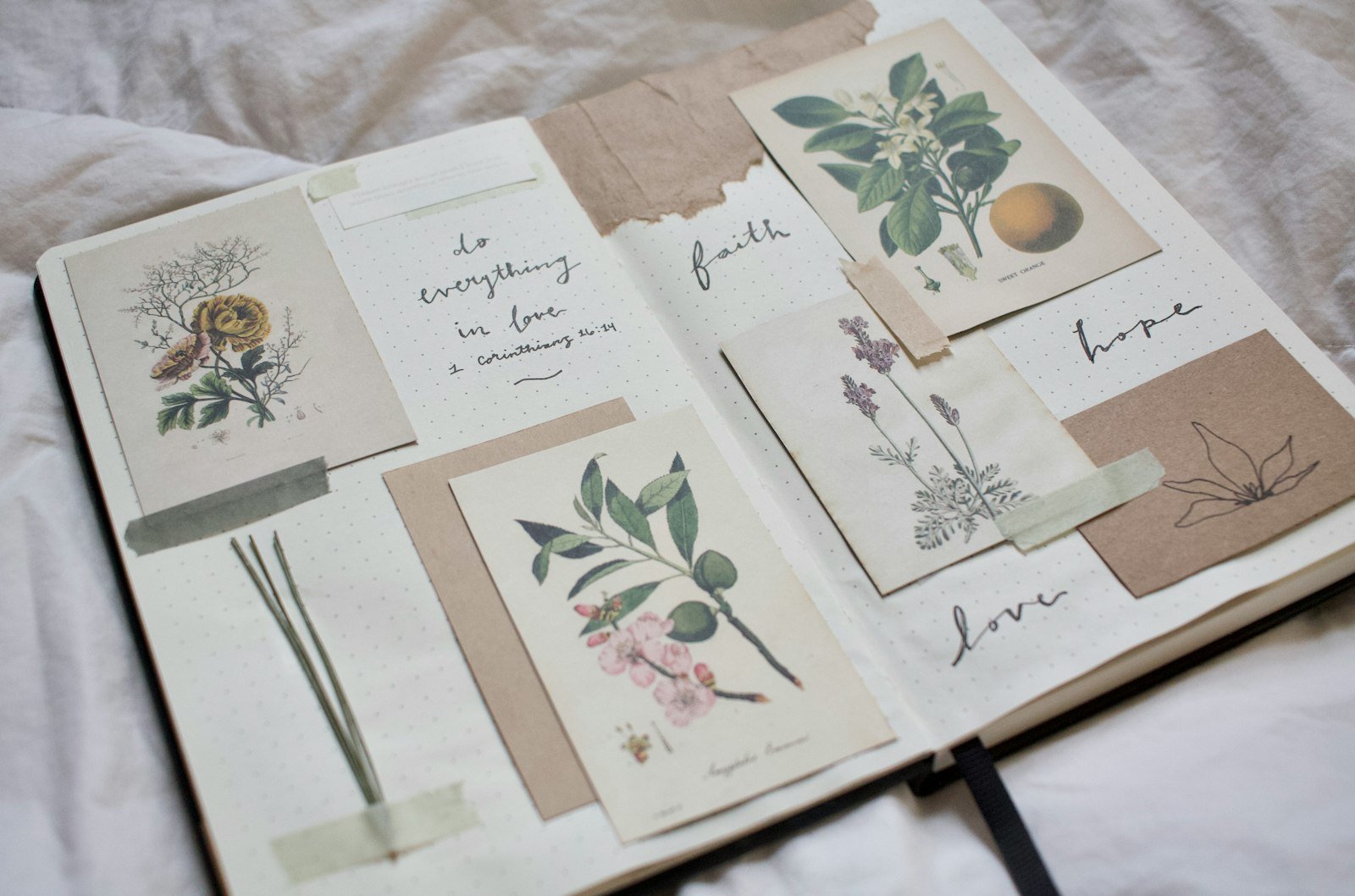
That warm, aged, slightly mysterious color you see in so many junk journals usually isn’t bought. It’s brewed. Make strong black tea, roughly three bags in half a cup of hot water, then brush or sponge it unevenly over plain paper, letting a few spots pool so they dry darker. Leave it to dry flat, then press it under a heavy book to take out any curl.
Two tips save a lot of frustration. Use thicker paper, such as watercolor or mixed-media paper, because thin printer paper tends to tear when it’s soaked. And try coffee as well: it works the same way and gives a deeper, browner tone.
Five mistakes almost every beginner makes
Stuffing the book until it won’t close. Every layer you add needs somewhere to go. If you add pages’ worth of paper, take pages out.
Drowning paper in wet glue. It wrinkles and buckles. Use a glue stick or tape for paper and keep the strong stuff for heavy pieces.
Shopping before starting. You’ll learn what you actually enjoy by making pages, not by filling a basket.
Comparing your first page to someone’s hundredth. The journals that stop you mid-scroll were made by people with years of practice. Yours will get there one page at a time.
Forgetting to write anything. A pretty page fades from memory. A pretty page with a date and two sentences becomes a time machine. Future you will be grateful.
Questions beginners ask
What is the point of a junk journal?
It’s a low-cost, creative way to keep memories, record your days and make something with your hands. Some people write in theirs every day; others treat them purely as art. There’s no single right purpose, and that’s a big part of the appeal.
Do I need to be artistic?
Not at all. Junk journaling is about collecting, arranging and layering, not drawing. If you can glue a ticket to a page and write a sentence beside it, you can do this.
Is junk journaling expensive?
It doesn’t have to be. Your main materials are free, and a glue stick, scissors and a pen are enough to begin. Costs creep up if you get into printables, stamps and specialty papers, so add them slowly and only when you know you’ll use them.
Can I write in a junk journal like a diary?
Yes, and many people do. Write straight onto the pages, on tags and cards tucked into pockets, or on a plain piece of paper glued over a busy background.
What’s the best glue for a junk journal?
For paper, a glue stick or double-sided tape is the easiest start because it keeps pages flat. Save stronger wet glues for heavier items like fabric or chipboard, and use them sparingly to avoid wrinkles.
Start with the box
You don’t need to decide anything big today. Find a box. Put this week’s ticket stubs and tea tags in it instead of the bin. Next weekend, open an old notebook and glue down one page. That’s how every junk journal you’ve ever admired began: with someone deciding that the small paper trail of an ordinary week was worth keeping.
As this section grows, you’ll find more ideas in our Junk Journal & Scrapbooking guides. And if you’d like a simple writing habit to go with your pages, start with our Journaling Basics.
Sources
History and definitions draw on the Wikipedia entry on junk journals. Junk journalers’ experiences are from Apartment Therapy. Glue guidance draws on The Graphics Fairy’s paper glue guide, and the tea-staining method on its tea-staining tutorial. Junk journal terms draw on Upcycle My Stuff.

Leave a Reply