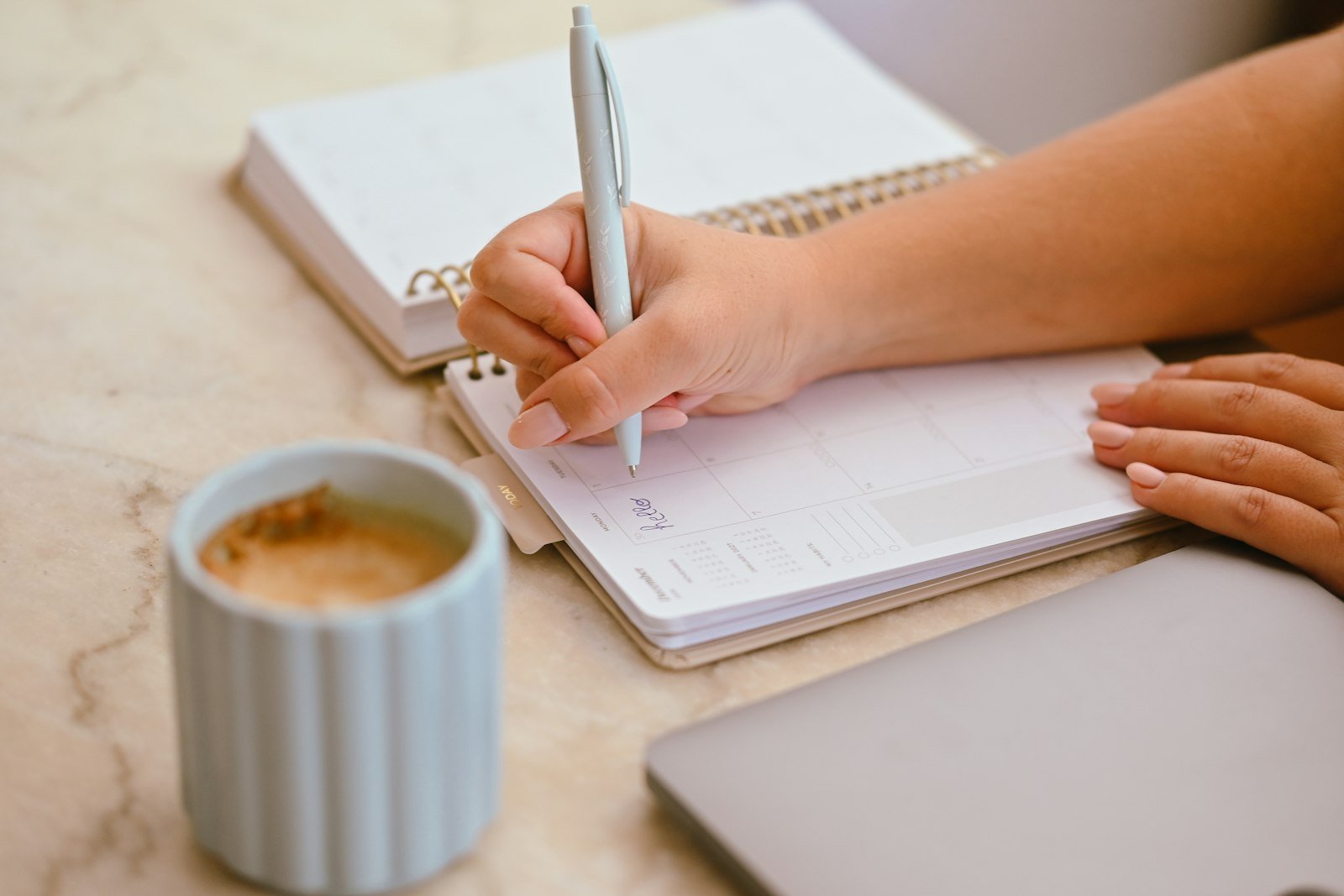
There’s a particular kind of heartbreak every journaler knows. You sit down with a fresh page, write something that matters to you, turn the page, and there it is: your words bleeding through like a ghost or a long grey smear where your hand dragged across wet ink.
The pen is the one tool you touch every single time you journal. Get it right, and writing feels effortless. Get it wrong, and you’ll find excuses not to open the notebook at all.
This guide cuts through the noise. Below you’ll find the 10 best pens for journaling, grouped by what they do best, followed by a plain-English guide to tips, inks, and paper so you can choose with confidence. We built this list from manufacturer specifications and the pens’ long-standing reputations in the journaling and bullet journal community, and we’ve flagged the trade-offs honestly.
The quick answer
- Best overall for bullet journals: Sakura Pigma Micron
- Best fine gel pen: uni-ball Signo UM-151 (0.38 mm)
- Best budget everyday pen: Pilot G2
- Best for left-handers: Pentel EnerGel
- Best for colour-coding: Zebra Sarasa Clip
- Best colored fineliners: Staedtler Triplus Fineliner
- Best for headers and lettering: Tombow Fudenosuke
- Best highlighter: Zebra Mildliner
- Best fountain pen for beginners: Lamy Safari
- Best for cheap or thin paper: uni-ball Jetstream
What makes a pen good for journaling?
A great office pen isn’t automatically a great journaling pen. Journals get written daily, re-read for years, and often decorated, so the bar is different. Here’s what actually matters:
- No bleed-through or heavy ghosting. You want to use both sides of the page.
- Smudge resistance. Especially important if you’re left-handed or you highlight over your writing.
- Archival, fade-resistant ink. Journals are meant to last. Pigment inks hold up far better over time than most dye inks.
- A comfortable, consistent line. If a pen skips or feels scratchy, you’ll stop reaching for it.
- The right tip size for your handwriting. Small handwriting and dot-grid layouts love 0.3 to 0.4 mm. Bigger, looser writers usually prefer 0.5 to 0.7 mm.
The 10 best pens for journaling
1. Sakura Pigma Micron: best overall for bullet journals
If you ask a room full of bullet journalers which pen they started with, a surprising number will say Micron. It’s a felt-tip fineliner filled with Sakura’s archival Pigma ink, which the company describes as waterproof, fade-resistant, and chemically stable. In practice, that means crisp, dark lines that won’t run when you add a highlighter or watercolour over the top.
Microns come in a range of tip sizes, from the hair-thin 005 (about 0.20 mm) up through 01, 02, 03, 05, and 08 (about 0.50 mm). For everyday journal writing, the 03 or 05 is the sweet spot. The 005 is lovely for tiny details but wears down fast if you press hard.
- Love: archival pigment ink, sharp lines, and plays well with highlighters and paint
- Watch out for: felt tips fray under heavy pressure; write with a light hand
- Best for: bullet journal layouts, lists, drawing, and anyone who wants their pages to last
2. uni-ball Signo UM-151: the best fine gel pen
The Signo UM-151 (sold as the Signo DX in some markets) is the pen people with small handwriting fall in love with. It comes in 0.28, 0.38, and 0.5 mm, and the 0.38 mm is the cult favorite: fine enough for dot-grid pages, yet reviewers consistently describe it as surprisingly smooth for such a tiny tip. The 0.28 mm is very fine and can feel scratchy, so start with the 0.38.
- Love: ultra-fine yet smooth, dark, consistent line, lots of colors
- Watch out for: capped only (no click version), and gel ink needs a moment to dry
- Best for: small handwriting, dense daily logs, planners
3. Pilot G2: best budget everyday pen
The G2 is the pen you can buy almost anywhere, and that’s part of its charm. It’s a retractable, refillable gel pen available in 0.38, 0.5, 0.7 and 1.0 mm, and its ink is rated archival and water-resistant. The 0.7 mm writes a bold, satisfying line; if your notebook paper is on the thin side, step down to 0.5 or 0.38 mm to reduce ghosting.
- Love: cheap, easy to find, refillable, smooth
- Watch out for: the ink isn’t quick-drying, so lefties may smudge
- Best for: everyday free-writing and gratitude journals
4. Pentel EnerGel: best for left-handers
If you’ve ever finished a journal entry with an ink-stained pinky, this is your pen. Pentel’s EnerGel ink is built to dry fast and resist smearing, which is why it has such a loyal following among left-handed writers. The 0.5 mm needle tip gives you a precise view of where you’re writing, and the RTX versions are refillable.
- Love: fast-drying, smear-resistant, smooth, refillable
- Watch out for: the line is a touch bolder than other pens of the same size
- Best for: left-handed journalers and fast writers
5. Zebra Sarasa Clip: best for color-coding
Color-coding is where journaling gets fun, and the Sarasa Clip gives you a huge palette to play with. Zebra lists 37 colors across its standard, milky and metallic ranges, all in 0.5 mm. The ink is a water-based pigment ink that Zebra describes as acid-free, archival, and water-resistant, and the spring-loaded clip grips the cover of a notebook so your pen never goes missing.
- Love: enormous color range, archival pigment ink, clever clip
- Watch out for: the lighter milky shades are best on darker or kraft paper
- Best for: habit trackers, color-coded calendars, creative spreads
6. Staedtler Triplus Fineliner: best colored fineliners
The Triplus is a 0.3 mm fineliner with a triangular barrel that keeps your grip relaxed during long sessions. Its standout feature is what Staedtler calls Dry Safe: you can leave the cap off for days without the tip drying out, which is a lifesaver if you tend to wander off mid-spread. It comes in 30 colors.
- Love: forgiving Dry Safe tip, comfortable grip, great color range
- Watch out for water-based ink, so it can run if you paint over it
- Best for: colorful lists, doodles, and decorative layouts
7. Tombow Fudenosuke: best for headers and lettering
The Fudenosuke is how many people get their first taste of hand lettering. It’s a small, firm brush pen: press lightly for a thin upstroke, press harder for a thick downstroke. It comes in a hard tip, which is easier to control and perfect for beginners, and a soft tip for more flexible, dramatic strokes. Use it for page titles, month headers, and quotes.
- Love: beginner-friendly, instantly makes headers look polished
- Watch out for: it’s a lettering pen, not an everyday writer
- Best for: titles, quotes, hand lettering practice
8. Zebra Mildliner: the best highlighter for journals
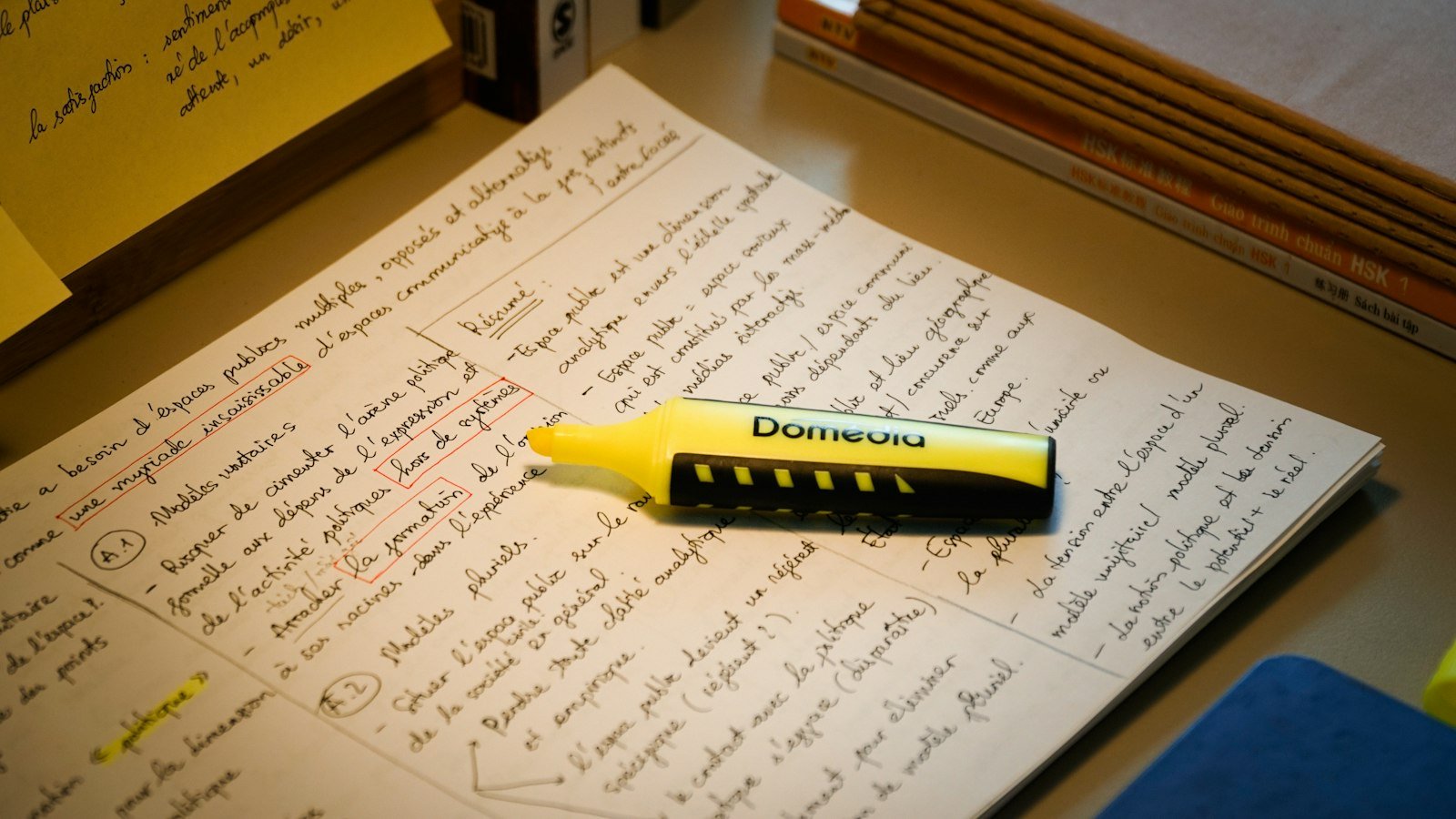
Neon highlighters can shout over your handwriting. Mildliners whisper. Their soft, muted colors are gentle on the eye, and every pen has two tips: a chisel end for highlighting and a fine bullet end for underlining, circling, and small notes. The complete set runs to 25 colors, and they’re a staple in bullet journals and student planners alike.
- Love: soft colors, two tips in one pen, smear-resistant water-based ink
- Watch out for: some lighter shades are very subtle on bright white paper
- Best for: highlighting, banners, color-blocking dates
Tip: always let your writing dry for a few seconds before highlighting over it, especially with gel ink. Pigment fineliners like the Micron are the safest pairing.

9. Lamy Safari: best fountain pen for beginners
There’s something about writing with a fountain pen that slows you down in the best way, and slowing down is half the point of journaling. Since its launch in the 1980s, the Lamy Safari has become the classic first fountain pen. It has a tough ABS plastic body, a triangular grip that guides your fingers into a relaxed hold, nibs in extra fine, fine, medium, and broad, and a left-handed option, which you can swap later.
It takes Lamy T10 cartridges out of the box. Add a Lamy Z28 converter, and you can fill it from bottled ink, which opens up a whole world of colors. For journaling, choose an extra fine or fine nib; wetter, broader nibs are more likely to show through standard notebook paper.
- Love: durable, comfortable, endlessly customizable, a joy to write with
- Watch out for: needs decent paper; costs more up front than a gel pen
- Best for: morning pages, reflective journaling, anyone who wants writing to feel like a ritual
Curious about fountain pens? Explore our fountain pens & ink guides.
10. uni-ball Jetstream: best for cheap or thin paper
Not every journal is a premium notebook. If you write in drugstore notebooks, a pocket diary, or a planner with thin pages, the Jetstream is the safe bet. Its hybrid, oil-based ink writes almost as smoothly as gel but dries quickly and resists smudging, and because it’s a ballpoint at heart, it’s far less likely to bleed through thin paper. It’s widely sold in 0.7 and 1.0 mm.
- Love: quick-drying, smudge-resistant, works on almost any paper
- Watch out for: the line isn’t as rich and saturated as gel ink
- Best for: pocket journals, planners, journaling on the go
Side-by-side comparison
| Pen | Type | Tip sizes | Best for |
|---|---|---|---|
| Sakura Pigma Micron | Pigment fineliner | 0.20 to 0.50 mm | Bullet journals, archival pages |
| uni-ball Signo UM-151 | Gel | 0.28, 0.38, 0.5 mm | Small handwriting |
| Pilot G2 | Gel | 0.38, 0.5, 0.7, 1.0 mm | Budget for everyday writing |
| Pentel EnerGel | Quick-dry gel | 0.5 mm needle, 0.7 mm | Left-handers |
| Zebra Sarasa Clip | Pigment gel | 0.5 mm | Color-coding |
| Staedtler Triplus | Fineliner | 0.3 mm | Colorful layouts |
| Tombow Fudenosuke | Brush pen | Hard and soft tip | Headers and lettering |
| Zebra Mildliner | Highlighter | Chisel and fine | Highlighting |
| Lamy Safari | Fountain pen | EF, F, M, B, LH | Reflective journaling |
| uni-ball Jetstream | Hybrid ballpoint | 0.7, 1.0 mm | Thin or cheap paper |
How to choose the right journaling pen
Start with how you write.
Small, neat handwriting suits fine tips like 0.3 to 0.38 mm. Big, flowing handwriting looks better with 0.5 to 0.7 mm, and a finer tip will feel scratchy under a heavy hand. If you’re left-handed, put quick-drying ink at the top of your list.
Understand the four ink types
- Pigment fineliner: crisp, archival, usually waterproof once dry. The best all-rounder for journals.
- Gel: smooth and vivid, with huge colour choice, but slower to dry.
- Hybrid ballpoint: dries fast, almost never bleeds, slightly less vibrant.
- Fountain pen ink: the most expressive and enjoyable to write with, but the most sensitive to paper quality.
Match the pen to your paper
Paper matters as much as the pen. A popular journal like the Leuchtturm1917 uses 80 gsm paper, while Rhodia uses a smoother 90 gsm paper, and some notebooks now offer 120 gsm editions for heavier inks. As a rule of thumb, the thinner the paper, the finer and drier your pen should be. Wet gel pens and broad fountain pen nibs will show through on lighter paper; pigment fineliners and hybrid ballpoints rarely do.
Test before you commit
Turn to the very last page of your journal and make a test swatch: write a line with each pen, add a stroke of highlighter across it after 5 seconds, then flip the page. In under a minute, you’ll know exactly which pens bleed, ghost or smear in your notebook, and you’ll never ruin a page you care about.
A simple starter kit
You don’t need a drawer full of pens & pencils. If you’re starting, this three-pen kit covers almost everything:
- A black Micron 03 or 05 for writing and layouts
- A Tombow Fudenosuke hard tip for headers
- Two or three Mildliners for highlighting and color
Add colored pens later, once you know how you like to journal. New to the habit itself? Start with our Journaling Basics guides.
Frequently asked questions
What are the best pens for bullet journaling?
For most bullet journalers, a pigment fineliner like the Sakura Pigma Micron is the best starting point because it writes crisply, doesn’t smear under highlighter and is archival. Pair it with a brush pen such as the Tombow Fudenosuke for headers and Zebra Mildliners for color.
Which journaling pens don’t bleed through paper?
Fine-tipped pigment fineliners and hybrid ballpoints like the uni-ball Jetstream are the least likely to bleed through. Bleed-through depends heavily on your paper, so always test new pens on the back page of your journal first.
Are gel pens good for journaling?
Yes. Gel pens like the Pilot G2, uni-ball Signo and Zebra Sarasa write smoothly and come in many colors. Just give the ink a few seconds to dry before you close the book or highlight over it, and choose a finer tip if your paper is thin.
What pen size is best for journaling?
Between 0.38 mm and 0.5 mm suits most people. Go finer (0.3 mm or less) for very small handwriting and detailed layouts, or up to 0.7 mm if you write large and want a bolder line.
What’s the best pen for left-handed journalers?
Choose fast-drying ink. The Pentel EnerGel is a long-standing favorite with left-handed writers, and the uni-ball Jetstream is another smudge-resistant option. Lamy also makes a left-handed nib for the Safari fountain pen.
The bottom line
The best pen for journaling is the one that makes you want to write. If you only buy one, make it a Sakura Pigma Micron. If you write small, try the Signo 0.38. If you’re left-handed, grab an EnerGel. And if you want journaling to feel like a quiet ritual rather than a chore, treat yourself to a Lamy Safari.
Whatever you choose, do the back-page test, write a little every day, and let your pages fill up. That’s where the clarity comes from. If you also cook from a notebook, see how to start a recipe journal that survives kitchen splashes.
Sources and notes
We did not test these pens ourselves. Tip sizes, colour counts, ink descriptions (such as archival, waterproof or quick-drying) and paper weights come from the manufacturers’ own product pages and specifications, and we have described them as the makers do. Opinions on feel and best use reflect the long-standing reputations of these pens in the journaling and bullet journal community. Product details change, so check the current listing before you buy. If you spot an error, let us know, and we will correct it.

Leave a Reply