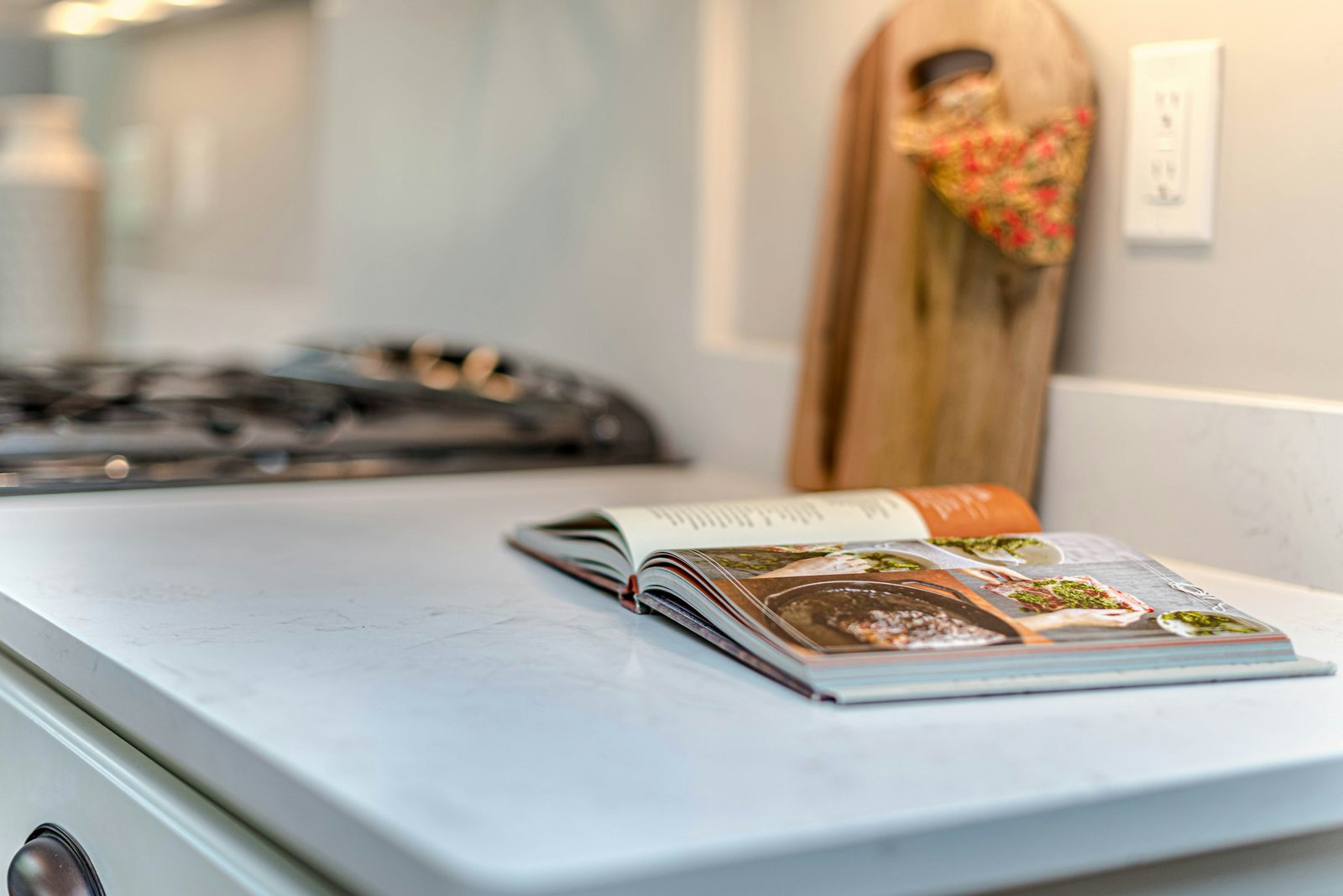
You know the dish. The one everyone asks for, the one you make without thinking, the one you could never write down if someone asked you right now. Maybe it is a soup that tastes like a particular winter or a cake that only works if you pull it out two minutes early. It lives in your hands and your head, and that is a fragile place to keep it.
Chicken parmesan is the dish I would hate to lose.
A recipe journal (some people call it a recipe notebook) is the fix: a notebook you cook from, where you write down what you make, what you change, and who taught you. It can be a battered spiral notebook, a hardback with printed pages, or a binder of cards. This guide shows you how to start one, what to put on every page, which format suits your kitchen, and how to keep the pages readable for years. There is a filled-in example page below and a free printable template you can use today. The food-safety numbers, paper-care advice, and copyright points come from official sources. Where we lean on a seller’s own guide, we say so, and everything is listed in the sources note at the end.
Key takeaways
- Start small: copy five recipes you already cook, then add new ones as you make them.
- Give every recipe the same fields: name, source, yield, time, ingredients, method, and a notes line for what you would change.
- Choose a layout that lies flat on the counter, and use water-resistant ink or pencil, because kitchens are messy.
- Write down safe cooking temperatures the first time so you never have to look them up again.
- Capture the story and the person behind family recipes while you can still ask them.
What is a recipe journal, and how is it different from a cookbook?
A cookbook is finished and written by someone else. A recipe journal is yours and never finishes. It records what you actually cooked, including the adjustments that make a recipe work in your oven and for your family. Papier, a stationery brand that sells recipe journals, suggests starting by copying the recipes you already make often and adding new ones gradually, and noting substitutions and oven quirks as you go.
How do you start a recipe journal?
- Pick the container first. A notebook you already own is fine. Starting is more important than choosing the perfect book.
- Gather your core recipes. Collect five dishes you cook often or would miss, plus any handwritten cards from relatives. AARP’s guide to family cookbooks uses the same approach: choose the recipes that matter most, not every recipe you have.
- Copy them out in one consistent layout (see the fields below), so each page is easy to scan with floury hands.
- Test as you copy. The first time you cook from your own page, fix anything unclear while the dish is in front of you.
- Leave room. Keep a blank page opposite each recipe for notes or photos.
What should you write on every recipe page?
Using the same fields every time turns a pile of notes into something you can scan in seconds. Papier’s printed recipe pages, for example, include ingredients, method, cooking time, difficulty, dietary and allergen notes, a tips section, and a five-star rating. You can copy that structure with a ruler or use this simpler version:
- Recipe name and date first cooked
- Source: Who gave it to you, or the book, site, or card it came from
- Yield, prep time, and cook time
- Ingredients with exact amounts, listed in the order you use them
- Method in numbered steps
- Safe finish: the internal temperature or doneness check, where it applies
- Allergens or swaps: for example, dairy-free or nut-free versions
- Notes and rating: what you changed, what you would do next time, and how it went
Why record the source and the story?
The story is the part you cannot rebuild later. AARP’s family-cookbook advice is to cook alongside the family cook, measure the “splash” or “glug” amounts, and record who taught them the dish and when. If the cook has died, it suggests asking relatives who watched them cook and comparing what each remembers. Photograph the original recipe card too, so the handwriting is kept.
My mother taught me a handful of savory dishes, and chicken parmesan was one of them. She was a wonderful cook.

What does a finished recipe page look like?
Rules are easier to follow once you have seen them in use. Here is a simple example we wrote to show the layout. It is a demonstration of the fields, not a tested family recipe, so swap in your own dish.
| Recipe | Sunday Tomato Soup |
| Source | Our own example for this guide |
| Serves / time | Serves 4. Prep for 10 minutes, cook for 30 minutes. |
| Allergens/swaps | No dairy or nuts as written, and vegetarian and vegan as it stands. Check your stock label if you need it gluten-free. |
| Ingredients | 1 tbsp olive oil 1 onion, chopped 2 garlic cloves, minced 1 can (28 oz / 800 g) whole tomatoes 2 cups (500 ml) vegetable stock 1 tsp salt A pinch of sugar, only if the tomatoes taste sharp. |
| Method | 1. Soften the onion in the oil for 5 minutes. 2. Add the garlic and stir for 1 minute. 3. Add the tomatoes, stock, and salt. Simmer for 20 minutes. 4. Blend until smooth, then taste and adjust. |
| Safe finish | Meat-free, so no probe needed. Reheat leftovers to 165°F (74°C). |
| Notes | Write what you changed and what you would do next time, for example: needed the pinch of sugar; try a cheese rind in the pot next time. |
| Rating | 4 out of 5. Would make again. |
Notice what the page does: you can scan it in seconds with a spoon in your other hand, the safe-temperature line is already filled in, and the notes line gives future you a reason to trust it.
Free printable recipe page template
Want to try the same layout? Download the one-page PDF with the button below the table, which has room for a full recipe on a single sheet. You can also print this section from your browser (Ctrl+P, or Cmd+P on a Mac) and fill it in with a pencil, or copy the fields into your own notebook. Use the safe finishing temperatures from the list above where they apply.
| Recipe name | |
| Source (who, book, or site) | |
| Date first cooked | |
| Serves / prep time/cook time | |
| Allergens/swaps | |
| Ingredients (exact amounts) | |
| Method (numbered steps) | |
| Safe finish (temperature or doneness check) | |
| Notes: what I changed, what I would do next time | |
| Rating (1 to 5) / make it again? |
What are the best recipe journal formats?
Papier’s own FAQ gives a practical comparison: a spiral-bound journal lies flat on the counter and has larger pages, while a hardback is more compact and feels more like a book for a long-term collection. Beyond those two, a three-ring binder lets you reorder pages and slip them into plastic sleeves, and AARP lists a binder with typed recipes in sleeves as one of the options for a family cookbook.
- Spiral notebook: best for everyday cooking because it stays open on its own.
- Hardback journal: best for keepsake collections and gifts.
- Binder with sleeves: best if you print recipes, want to reorder them, or want pages that wipe clean.
- Recipe cards in a box: best for short recipes you share often.
If you are choosing a notebook, our guides to notebooks, sketchbooks, and planners explain paper weight and binding in more detail.
What pen and paper should you use in the kitchen?
Splashes, steam, and oily fingers are the real tests of a recipe journal. The U.S. National Archives, writing about the care of federal records, says to use a No. 2 graphite pencil for notations and to avoid ballpoint, felt-tip, and similar pens, whose inks it describes as acidic and water-soluble, so they can fade or run when wet. Archival guidance is written for government records, not kitchens, but the principle carries over: ink that dissolves in water is a bad choice for a page that gets wet.
Our own suggestion, not an official rule: use a pencil for drafts and a pigment-based ink that the maker labels waterproof or archival for pages you want to keep. We compare several of the best pens for journaling in our pens, markers, and pencils section. Whatever you choose, test it first: write a line on the back page, wait, then dab it with a wet finger.
The Archives also says kraft and colored papers are acidic and unstable, and their dyes can run when wet, so plain white or cream paper is the safer choice for something you hope to hand down.
Which safe cooking temperatures belong in a recipe journal?
If you write one thing down for food safety, make it the finishing temperature. The U.S. government’s food-safety site lists these safe minimum internal temperatures:
- Poultry, including ground poultry and stuffing: 165°F (74°C)
- Ground beef, pork, and lamb: 160°F (71°C)
- Beef, pork, and lamb steaks, roasts, and chops: 145°F (63°C), then rest for 3 minutes
- Fish: 145°F (63°C), or until the flesh is no longer translucent and flakes easily with a fork
- Egg dishes such as frittata or quiche: 160°F (71°C)
- Leftovers and casseroles: 165°F (74°C)
Put the right number on each recipe page and a small conversions table on the inside cover if you cook from more than one country’s recipes.
How do you add your family’s recipes without losing the story?
- Ask the cook to make the dish with you and write down amounts as you watch, not as they remember them.
- Note small details: the pan, the heat, and how it should look or smell at each stage.
- Write the cook’s name and the occasion at the top of the page.
- Photograph the original card, and note where the card itself is stored.
- Share the finished page with relatives and ask what you got wrong. The corrections are often the best part.
Can you copy recipes from books and websites into your journal?
The Copyright Office says “a mere listing of ingredients is not protected under copyright law,” but that a recipe may be protected where it is accompanied by substantial literary expression, such as an explanation or directions, and that a cookbook collection of recipes may also qualify. Copying a recipe into your own private journal to cook from is a very different thing from publishing or selling it. If you ever publish, rewrite the method in your own words and credit the source. This is general information, not legal advice.
How do you keep a recipe journal from falling apart?
- Write in pencil or waterproof ink, as covered above.
- Use a book stand or a clip to keep the page open and away from the splash zone.
- Keep a photo backup. Take a phone picture of each finished page so one spill cannot erase it.
- Store it away from heat and damp, not on the shelf above the stove.
- Avoid tape on keepsake pages. The National Archives advises against using tape to repair records, so copy a torn page onto a fresh one instead.
Frequently asked questions
What is a recipe journal?
A recipe journal is a notebook or binder where you record recipes you cook, along with notes on changes, timings, sources and stories. It is a personal, ongoing record rather than a published cookbook.
What should I write in a recipe journal?
At minimum: the recipe name, source, yield, ingredients with exact amounts, numbered method, cooking time and a notes line. Add the safe finishing temperature for meat, poultry, fish and egg dishes, and a rating so you remember what was worth repeating.
What is the best recipe journal format?
A spiral-bound journal lies flat on the counter, which suits daily cooking. A hardback is more compact and better for a long-term keepsake. A binder with sleeves suits printed recipes and pages you want to wipe clean.
Can I make a recipe journal from a regular notebook?
Yes. Rule off a simple template on the first page, number the pages and leave the first two for an index. Write the same fields for every recipe so the pages stay consistent.
How do I start a family recipe journal?
Choose five dishes the family would miss, cook each one with the person who makes it best, and write down their actual amounts and stories. Photograph their original recipe cards so the handwriting is preserved.
How can I keep a recipe journal from getting stained?
Use pencil or waterproof ink, keep the book away from the splash zone, and take a phone photo of each page as a backup. A binder with plastic sleeves lets you wipe pages clean.
The bottom line
The best recipe journal is the one you actually use. Start with five dishes, give every page the same fields, write the safe temperature where it applies, and choose ink that can survive a splash. Then add the stories as you collect them, because in a few years the stories will be worth more than the measurements.
Sources and notes
We drew on the following sources. Format comparisons and page layouts come from the sellers’ own descriptions and are noted as such; we did not test the journals mentioned.
- FoodSafety.gov: Safe Minimum Internal Temperatures
- U.S. National Archives: Preserving paper records (pens, paper and tape guidance for federal records)
- U.S. Copyright Office: What does copyright protect?
- AARP: How to make a family cookbook
- Papier: How to use a recipe journal (a seller’s guide; its layout and format notes are the seller’s own)
Our suggestions about pens and ink are our own and are labelled as such. If you spot an error, tell us, and we will correct it.

Leave a Reply