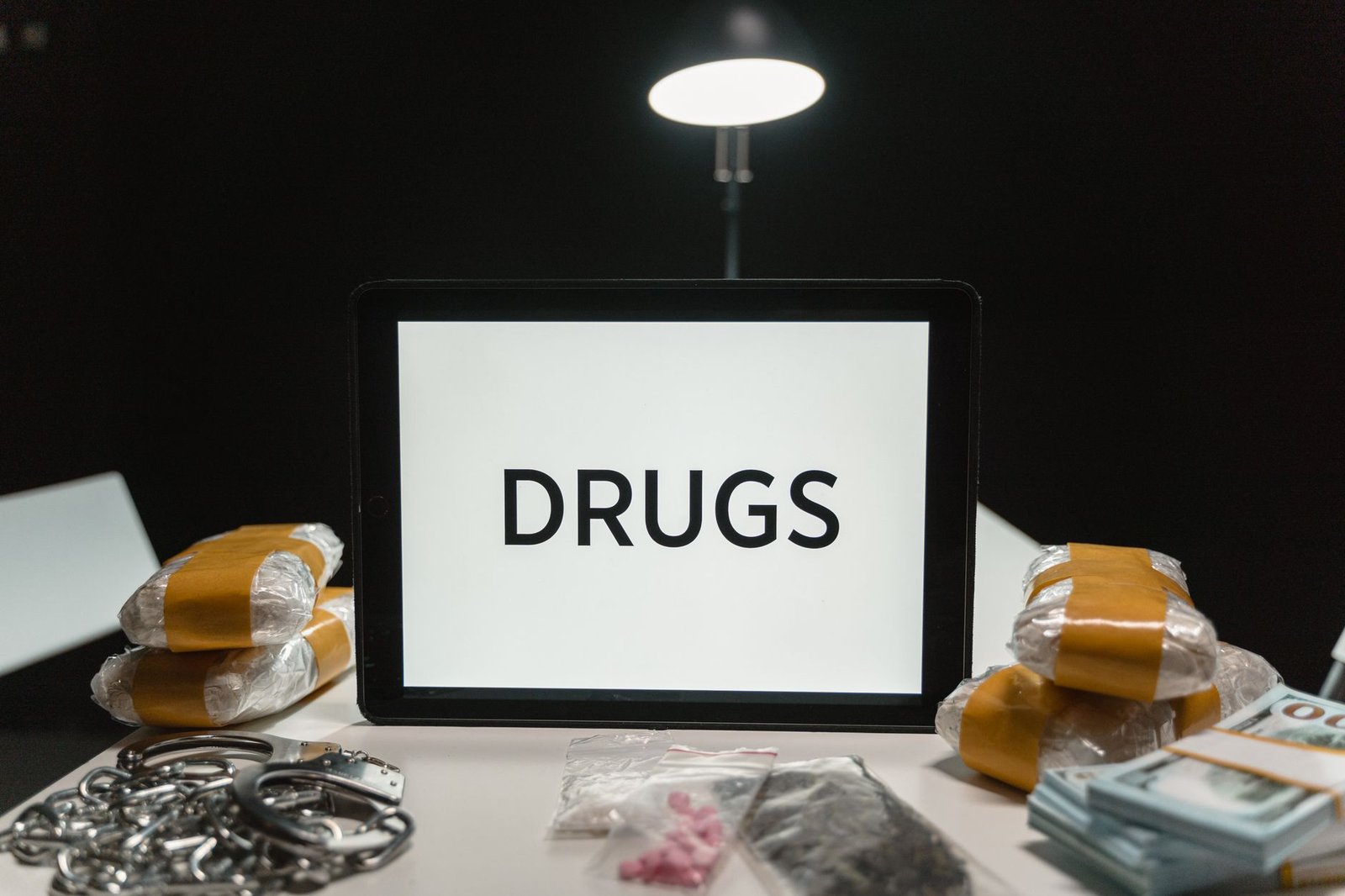
The arresto that tells a bigger story than one bad decision
A 21-year-old was arrested — arrestato — in Italy after authorities recovered 300 grams of hashish and roughly €7,000 in counterfeit banknotes from his possession. That’s not a minor catch. Three hundred grams is well above personal-use quantities under Italian law, and seven thousand euros in fake bills represents a meaningful injection of fraudulent currency into local circulation.
What makes this particular arresto stand out isn’t the drugs or even the fake cash on their own. It’s the fact that both showed up together — held by the same 21-year-old, presumably as tools of the same operation.
Why dealers use counterfeit cash — the uncomfortable logic
Here’s the thing. Drug dealing at the street level is a cash-only economy. No receipts, no invoices, no paper trail. That opacity is the whole point. But it also creates a vulnerability: a dealer holding real euros after a string of sales is holding evidence that can be traced, counted, and used against him in court.
Counterfeit currency flips that dynamic. Fake bills can be used to buy product from suppliers — essentially passing the risk of detection upstream — or mixed into cash transactions to reduce the proportion of real money that changes hands. Frankly, it’s a crude but occasionally effective form of criminal arbitrage.
Investigators across Europe have flagged this pattern for years. The European Central Bank’s most recent counterfeit report noted that the majority of fake euro notes withdrawn from circulation were low-denomination bills, the kind most commonly used in street-level transactions. That’s not a coincidence.

What 300 grams of hashish actually means on the street
To put the drug seizure in context: 300 grams of hashish, at typical Italian street prices, represents somewhere between €2,000 and €4,000 in retail value. Not cartel-level volume, but far too much for personal use. Under Italian law, quantities above a certain threshold trigger presumption of intent to distribute — meaning the 21-year-old was almost certainly facing trafficking charges, not just possession.
What most people miss is that low-to-mid-level distributors are often the most forensically interesting arrests. They sit close enough to the supply chain to have contact information, supplier relationships, and operational knowledge that prosecutors can actually use. The kingpins are insulated by layers of intermediaries. The 21-year-old in the middle? He knows names.
Whether Italian investigators are working this arrest as a standalone case or as a thread to pull on a wider network isn’t publicly confirmed. But given the counterfeit cash component — which implies at least one additional criminal connection — it would be surprising if this stopped at one arrest.
The counterfeit currency angle law enforcement can’t ignore
Counterfeit euro production is a designated priority for Europol and the ECB’s Counterfeit Analysis Centre. Fake bills don’t just defraud individual merchants — they erode confidence in the currency itself, which is why EU member states treat production and distribution of counterfeit notes as serious criminal offenses carrying sentences comparable to drug trafficking.
Finding €7,000 in fake banknotes alongside a drug stash raises an immediate question investigators will want answered: where did the bills come from? Counterfeiting at that scale typically requires either a printing operation or a connection to one. A 21-year-old street dealer doesn’t usually print his own money. That means there’s likely a supplier for the fake cash just as there’s a supplier for the hashish — and they may or may not be the same person.
This arresto, in other words, might be the entry point into two separate criminal ecosystems that happen to overlap in one young man’s jacket pocket. Italian authorities will have their work cut out — but they’re also holding more leverage than a simple drug bust would normally provide. That’s a meaningful position to be in.

Leave a Reply